
Showing posts with label earth. Show all posts

Jul 12, 2009

Reduce Air Pollution

Complete elimination of air pollution is something we probably won't see for a long time, but everyone can help make a change.

Some people think 'What can I do to help the environment as one person?' and so they continue living their lives like like normal. Destroying the enviornment.


But if everybody thought that way, were would we be? That's why even though you are just one person, you can still make a big change by following these steps from EPA US:


Ways to Reduce Air Pollution
We make choices everyday that can help reduce air pollution. Below are a few ideas that you can take to help clean our air.


At Home
*Conserve energy - turn off appliances and lights when you leave the room.
*Recycle paper, plastic, glass bottles, cardboard, and aluminum cans. (This conserves energy and reduces production emissions.)
*Keep woodstoves and fireplaces well maintained. You should also consider replacing old wood stoves with EPA-certified models. Visit www.epa.gov/woodstoves.
*Plant deciduous trees in locations around your home to provide shade in the summer, but to allow light in the winter.
*Buy green electricity-produced by low-or even zero-pollution facilities.
*Connect your outdoor lights to a timer or use solar lighting.
*Wash clothes with warm or cold water instead of hot.
*Lower the thermostat on your water heater to 120°F.
*Use low-VOC or water-based paints, stains, finishes, and paint strippers.
*Test your home for radon-a dangerous, radioactive gas that is odorless and tasteless. If the test shows elevated levels of radon, the problem can be fixed cost effectively. Visit www.epa.gov/radon.
*Choose not to smoke in your home, especially if you have children. If you or your visitors must smoke, then smoke outside. Visit www.epa.gov/smokefree.


Buy Smart
*Buy ENERGY STAR products, including energy efficient lighting and appliances. They are environmentally friendly products. For more information, visit http://www.energystar.gov/ or call 1-888-STAR-YES.
*Choose efficient, low-polluting models of vehicles. Visit www.epa.gov/greenvehicles.
*Choose products that have less packaging and are reusable.
*Shop with a canvas bag instead of using paper and plastic bags.
*Buy rechargeable batteries for devices used frequently.


Drive Wise
*Plan your trips. Save gasoline and reduce air pollution.
*Keep tires properly inflated and aligned.
*In the summertime, fill gas tank during cooler evening hours to cut down on evaporation. Avoid spilling gas and don't "top off" the tank. Replace gas tank cap tightly.
*Avoid waiting in long drive-thru lines, for example, at fast-food restaurants or banks. Park your car and go in.
*When possible, use public transportation, walk, or ride a bike.
*Get regular engine tune ups and car maintenance checks (especially for the spark plugs).
*Use an energy-conserving (EC) grade motor oil.
*Ask your employer to consider flexible work schedules or telecommuting.
*Report smoking vehicles to your local air agency.
*Join a carpool or vanpool to get to work.


For Your Health
*Check daily air quality forecasts, which tell how clean or polluted your air is, and the associated health concerns. Visit http://www.airnow.gov/.
*Remove indoor asthma triggers from your home and avoid outdoor triggers in order to effectively control your asthma. Visit www.epa.gov/asthma to learn more about asthma triggers and ways to avoid them.
*Minimize your sun exposure. Wear sun block and UV protection sunglasses. To find out about current forecasts of UV where you live, go to www.epa.gov/sunwise/uvindex.html.
Thank you for reading and please subscribe.

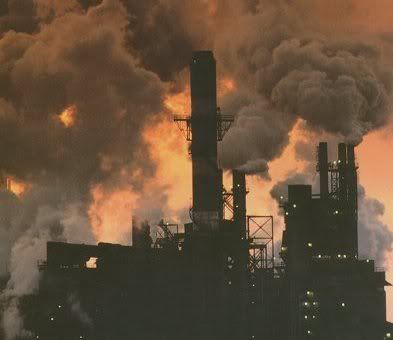
Earth is Dying - Air Pollution

A topic everybody talks about, yet no one prevents. Air pollution.


The atmosphere is a complex, dynamic natural gaseous system that is essential to support life on planet Earth. Stratospheric ozone depletion due to air pollution has long been recognized as a threat to human health as well as to the Earth's ecosystems.


Pollution causes both long term and short term health problems for humans. Examples of short-term effects include irritation to the eyes, nose and throat, and upper respiratory infections such as bronchitis and pneumonia. Other symptoms can include headaches, nausea, and allergic reactions. Short-term air pollution can aggravate the medical conditions of individuals with asthma and emphysema. In the great "Smog Disaster" in London in 1952, four thousand people died in a few days due to the high concentrations of pollution


Long-term health effects can include chronic respiratory disease, lung cancer, heart disease, and even damage to the brain, nerves, liver, or kidneys. Continual exposure to air pollution affects the lungs of growing children and may aggravate or complicate medical conditions in the elderly. It is estimated that half a million people die prematurely every year in the United States as a result of smoking cigarettes.

However not only people are affected in terribly ways, wildlife is at a greater risk than most people understand.
Some air pollutants harm plants and animals directly. Other pollutants harm the habitat, food or water that plants and animals need to survive. Read on to learn more about how air pollutants harm plants and animals.

Acid rain harms
When acidic air pollutants combine with water droplets in clouds, the water becomes acidic. When those droplets fall to the ground, the acid rain can damage the environment. Damage due to acid rain kills trees and harms animals, fish, and other wildlife. Acid rain can destroy the leaves of plants like in the picture at the left. When acid rain soaks into the ground, it can make the soil an unfit habitat for many living things. Acid rain also changes the chemistry of the water in lakes and streams, harming fish and other aquatic life.

The thinning ozone
Air pollutants called chlorofluorocarbons(or CFCs) have destroyed parts of the ozone layer.The ozone layer, located in the stratosphere layer of Earth's atmosphere, shields our planet from the Sun's ultraviolet radiation. The areas of thin ozone are called ozone holes. Ultraviolet radiation causes skin cancer and damages plants and wildlife.

Tropospheric ozone
Ozone molecules wind up near the Earth's surface as a part of air pollution. Ozone molecules near the ground damages lung tissues of animals and prevent plant respiration by blocking the openings in leaves where respiration occurs. Without respiration, a plant is not able to photosynthesize at a high rate and so it will not be able to grow.

Global warming
Our planet is currently warming much more rapidly than expected because additional greenhouse gasses are being released into the atmosphere from air pollution. When fuels are burned, some of the pollutants released are greenhouses gasses. Through the process of photosynthesis, plants convert carbon dioxide into oxygen and use the carbon to grow larger. However, the amount of carbon dioxide released by burning fuels is much more than plants can convert.

Global warming is causing changes to the places where plants and animals live around the world. For example:

Near the poles, ice and frozen ground are melting. This causes changes in the habitat and resources for plants and animals living there.
Ocean warming, rising sea levels, runoff, and coral diseases are causing change in shallow marine environments such as coral reefs.
Global warming is causing less rain to fall in the middle of continents. This makes these areas very dry and limits water resources for plants and animals. [1]

Although I believe that global warming is due to our solar system moving to a different part of the universe that is warmer (considering that all planets, not just earth, are getting very warm {DETAILS HERE}) a big part of the heat is due to people polluting... I would estimate that in 50 years if we keep on polluting earth will be too unbearable foe human life.

Here are American's polluted cities:
Most polluted US cities
(By short-term particle pollution)
1. Pittsburgh, Pennsylvania
2. Fresno, California
3. Bakersfield, California
4. Los Angeles, California.
5. Birmingham, Alabama
6. Salt Lake City, Utah
7. Sacramento, California
8. Logan, Utah
9. Chicago, Illinois
10. Detroit, Michigan

Most polluted US cities
(By ozone pollution)
1. Los Angeles, California
2. Bakersfield, California
3. Visalia, California
4. Fresno, California
5. Houston, Texas
6. Sacramento, California.
7. Dallas-Fort Worth, Texas
8. Charlotte, North Carolina
9. Phoenix, Arizona
10. El Centro, California

Most polluted US cities
(By year-round particle pollution)
1. Bakersfield, California
2. Pittsburgh, Pennsylvania
3. Los Angeles, California
4. Visalia, California
5. Birmingham, Alabama
6. Hanford, California
7. Fresno, California
8. Cincinnati, Ohio
9. Detroit, Michigan
10. Cleveland, Ohio

Below is a list of the most polluted countries:
Rank Country Tons of Carbon per person
1 Qatar 20.05
2 United Arab Emirates 10.36
3 Kuwait 8.69
4 Guam 7.76
5 Bahrain 7.66
6 Singapore 7.04
7 United States 6.04
8 Luxembourg 5.69
9 Brunei 5.28
10 Australia 5.19

And the 'greenest' countries are:

Yale University's ranking of 149 countries according to an environmental performance index (EPI)--a weighting of carbon and sulfur emissions, water purity and conservation practices.
TOP 10 Greenest:
1 Switzerland 95.5
2 Sweden 93.1
3 Norway 93.1
4 Finland 91.4
5 Costa Rica 90.5
6 Austria 89.4
7 New Zealand 88.9
8 Latvia 88.8
9 Colombia 88.3
10 France 87.8

Some interesting facts -
India is number 120 on Greenest countries
Russia is 28
The United Kingdom is 14
The USA is 39


Thanks for reading, please subscribe and read my next post on how to help eliminate pollution.

[1] http://www.windows.ucar.edu/tour/link=/milagro/effects/wildlife_forests.html